The job is not “traffic.” The job is booked installs.
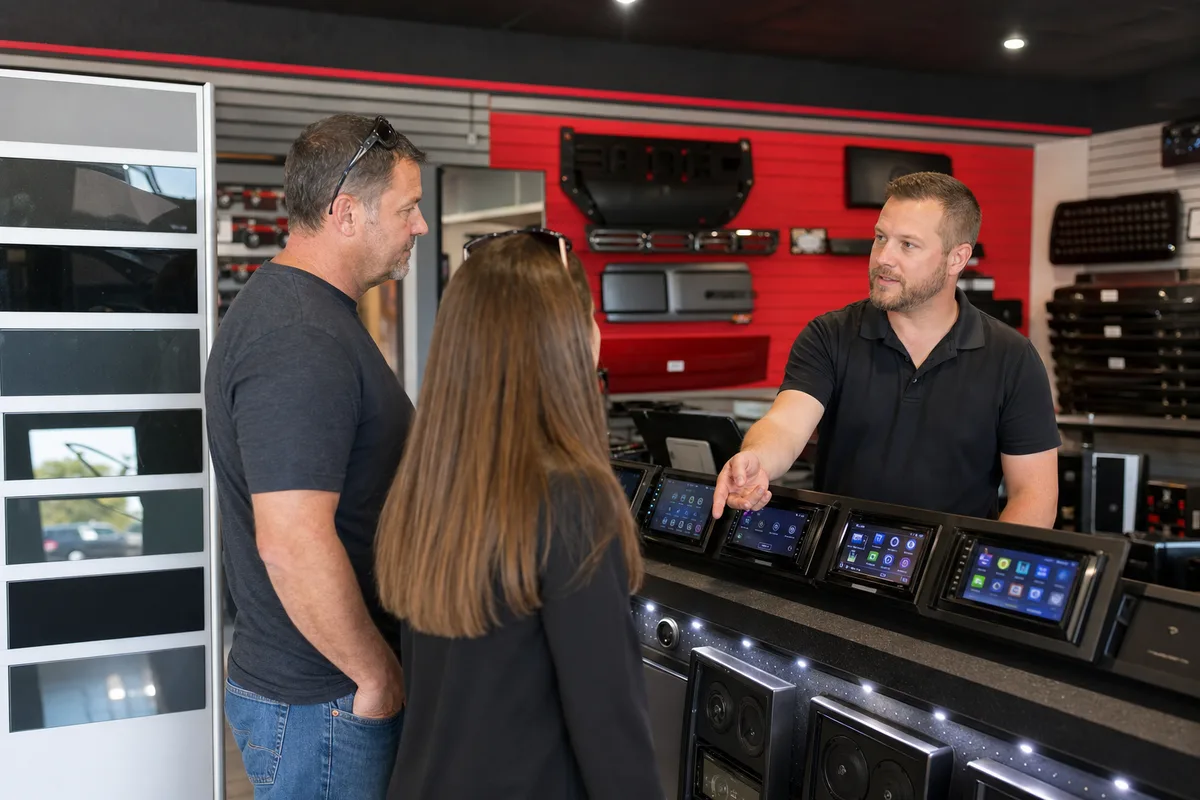
Family-owned auto shops do not struggle because nobody can find a website builder. They struggle because the website does not mirror the counter — tint quotes by text, head units in stock today, truck accessories that need a bay appointment.
Auto Accessories USA has operated in Westland since 2006. The business already wins on trust and speed. The digital gap was a site that could not keep up with how customers actually buy: see the product, confirm availability, reach a human immediately.
That is a different design problem than ecommerce templates optimized for shipped boxes. Service-heavy retail needs product truth, service context, and frictionless contact — especially on mobile, where most local searches start.
Catalog + conversation beats another plugin stack
Instead of stacking booking widgets, chat SaaS, and a separate product feed, we built a unified experience: shoppable categories, real SKUs where inventory matters, and prominent SMS and call paths tied to the jobs that drive revenue — tint, audio, truck gear.
When a visitor taps “Text us,” they should land in a conversation that can close, not a contact form that disappears into a shared inbox. The site supports that behavior instead of fighting it.
This is the same ownership logic we apply across May client work: one core asset your team controls, rather than four subscriptions that sync imperfectly.
Local SEO and AI search reward accuracy, not adjectives
Google’s local surfaces — and the AI-assisted calling experiments rolling out in 2026 — reward businesses that keep hours, services, and product categories accurate. Static brochure sites drift; operational sites stay aligned with what the counter actually sells.
For automotive retail, that means clear service pages, product families that match search intent (“window tint SUV,” “Apple CarPlay install”), and fast mobile performance. Fancy animations matter less than whether a driver stuck in a parking lot can text you in two taps.
What other service owners can take from this build
If your margin lives in appointments, installs, or high-consideration purchases, optimize for contact quality — not page count. Show proof, show inventory where it helps, and remove dead ends.
The businesses winning locally this year are not the ones with the most plugins. They are the ones whose digital front door feels as competent as their physical one — and that is buildable, ownable, and yours after launch.