
Rented apps train you to accept “almost fits”
Industry SaaS is built for the median customer — which means nobody perfectly. You adapt staff training, workaround spreadsheets, and customer apologies to fit the tool.
Seat fees rise with headcount. API access tiers wall off integrations. Features you rely on migrate to “enterprise.” You are funding their roadmap while begging support for yours.
A custom app inverts the relationship. The workflow matches the business: field checks, install scheduling, loyalty logic, dealer portals, franchise reporting — whatever actually produces margin for you.

Ownership means handoff — not hostage
“Custom” fails when agencies retain the keys. Real ownership is source code in your repository, documentation your team can read, and infrastructure you can migrate.
Revio’s model is project-scoped delivery with full transfer: designs, repos, database schemas, and admin tools. No perpetual license to us. Third-party services (SMS, payments, email) stay on your accounts.
That matters when you sell, fundraise, or bring development in-house later. Owned software is a balance-sheet asset. Rented SaaS is an expense that vanishes when you stop paying.
Web app, mobile app, or both?
Not every business needs App Store presence on day one. Many owners need a fast mobile web experience tied to SMS and CRM — especially in local service and B2B.
When repeat usage, push notifications, or offline access justify native builds, we ship iOS and Android with the same backend you already own.
The decision is economic: where do customers interact weekly? If the answer is “in the field” or “on the shop floor,” a purpose-built app often pays back faster than another year of SaaS seats.
Data models are strategy, not engineering trivia
Your customer table, order history, and service records are the memory of the business. Template apps silo that memory inside their schema — exportable sometimes, usable rarely.
Custom apps model your reality: families and fleets for auto shops, flavors and doors for CPG, locations and seasonal menus for food operators. That structure powers reporting, reactivation campaigns, and forecasting later.
The May client work we referenced across food, auto, and retail was not about screens — it was about capturing truth once and using it everywhere.
Total cost: project fee vs forever rent
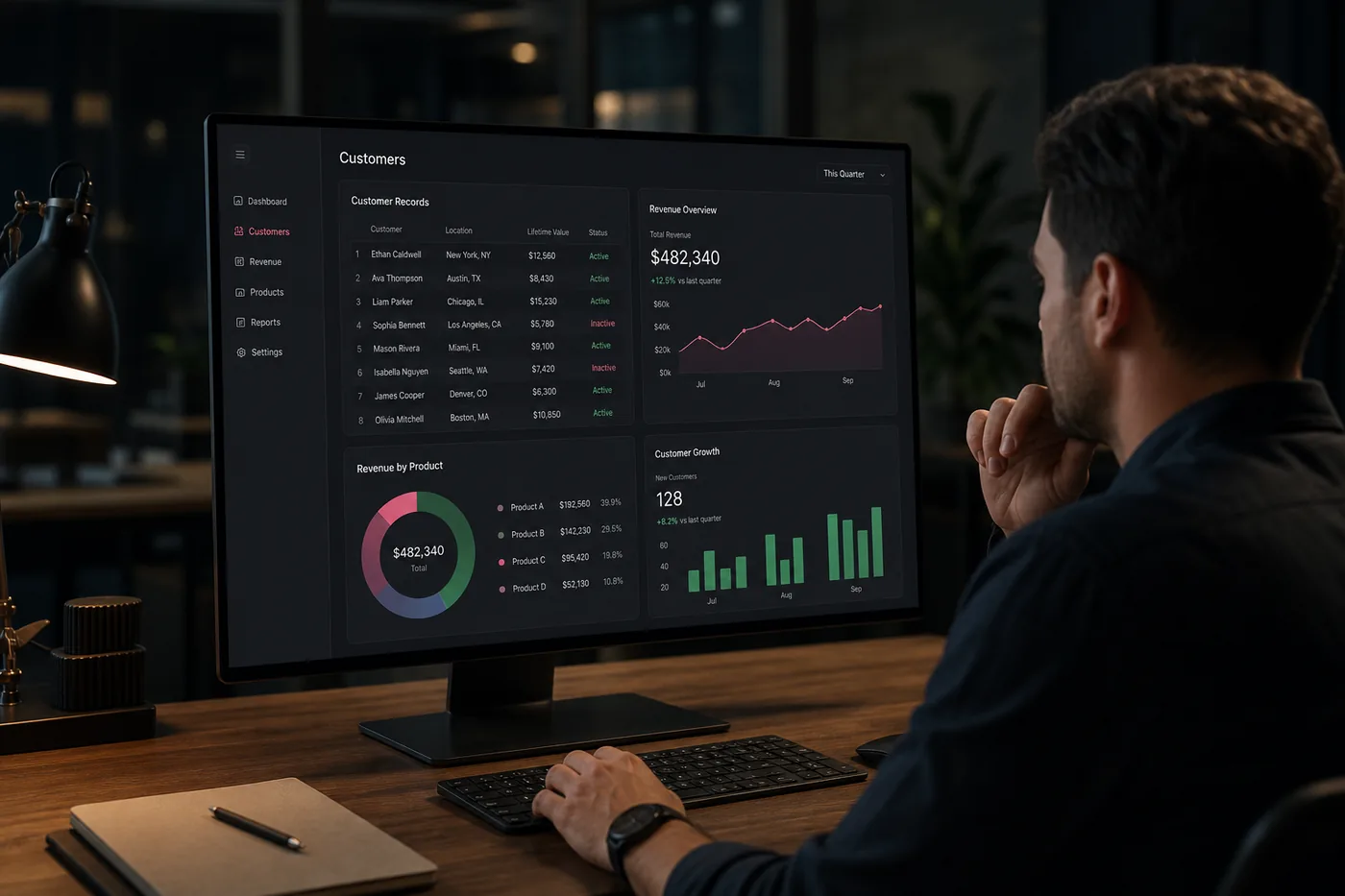
Owners compare a custom quote to monthly SaaS and stop there. The fair comparison is five-year TCO: subscriptions, integrations, labor workarounds, and opportunity cost when the tool cannot do the one thing you need.
A scoped build can be higher upfront and still win — because it removes categories of spend and unlocks revenue paths template vendors will never prioritize for your niche.
If the workflow touches revenue daily, renting forever is the expensive choice. Building once is how operators with thin margins stay competitive against chains with internal engineering.
When to build vs when to rent
Rent email delivery, payment rails, and commodity infrastructure. Build what differentiates: how you quote, schedule, fulfill, reorder, and prove quality.
If you are unsure, start with the owned website and customer hub — then extend into app workflows as friction points become obvious. The architecture we use is modular so you do not replatform later.