
New customer ads are expensive because trust starts at zero
Meta, Google, and TikTok can deliver impressions. They cannot deliver relationship. Every cold campaign pays the trust tax: who are you, are you legit, will you disappear after I pay?
Past customers already cleared that bar. They chose you once. Many would choose you again if you showed up with the right offer, at the right time, in the right channel.
Owners sitting on years of POS exports, booking logs, quote requests, and SMS threads are sitting on inventory more valuable than another month of prospecting ads — they just have not wired it to campaigns.
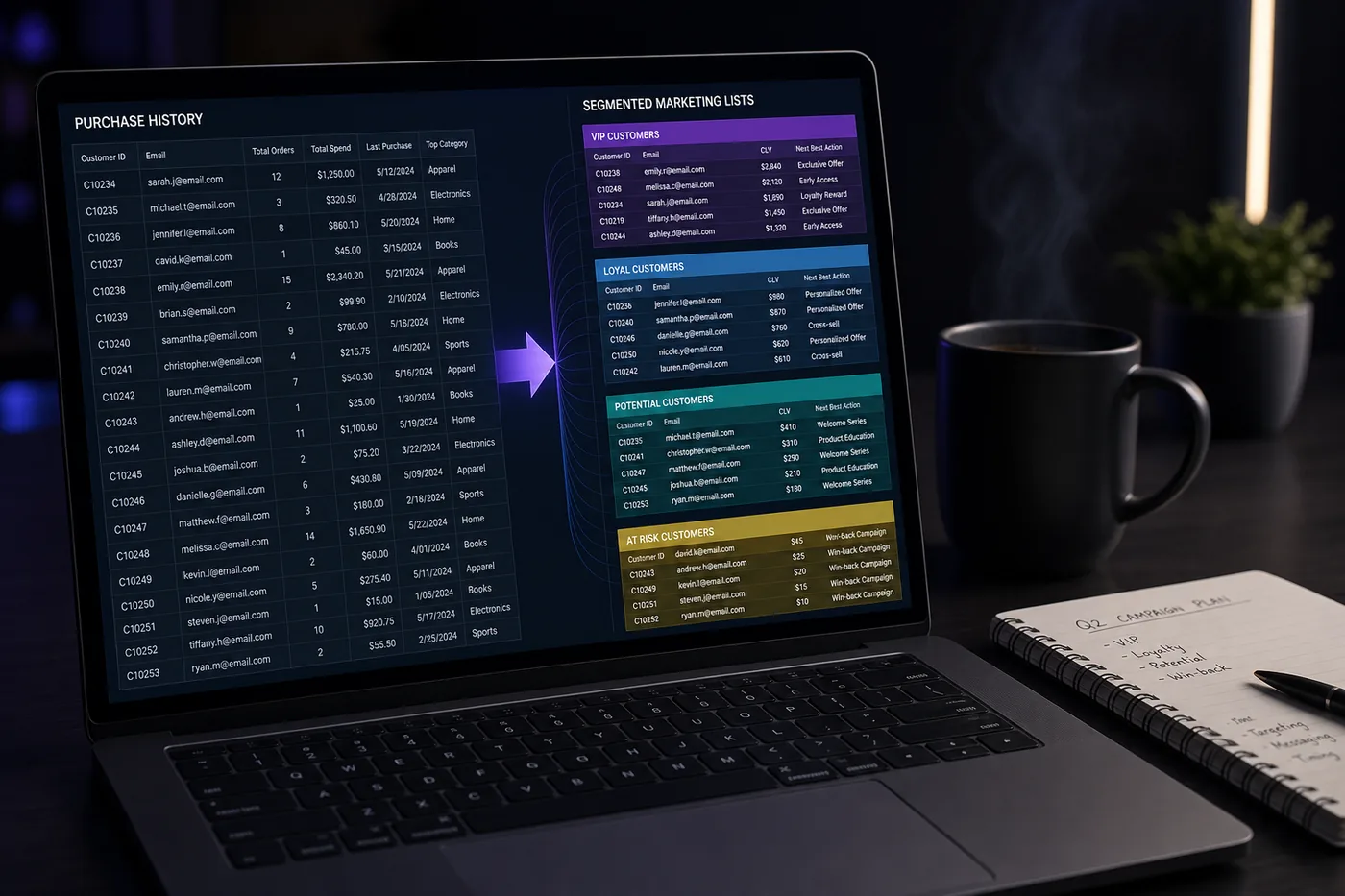
What 5× and 10× actually mean in operator math
We are not promising magic multipliers on random traffic. We mean: reactivation campaigns often deliver several times the return of cold acquisition because conversion rates are higher, AOV can be higher, and fulfillment is predictable.
A restaurant knows Tuesday regulars. A shop knows who bought winter tires. A CPG brand knows which stores reordered and which buyers asked for a flavor that sold out. Those are segments with stories — not “25% off to everyone.”
When Auto Accessories USA routes high-intent visitors to SMS, they are shortening the path for people already inclined to buy installs. Data-driven reactivation applies the same logic to people who already raised their hand.
The segments owners already have (but do not use)
Lapsed repeat buyers — purchased twice, gone quiet six months.
Quote-no-close — asked for pricing, never finished.
Seasonal cyclers — appear every year before a known event.
High-LTV champions — small group, disproportionate revenue.
Local radius — within driving distance of a location but inactive.
None of these require new branding. They require organized data, consent-compliant messaging, and offers that respect why they left.
Campaigns that feel personal because they are
Batch-and-blast discounts train customers to wait for sales. Strategic reactivation speaks to context: “Your last tint was three years ago — UV season is here,” or “The flavor you requested is back in stores near you.”
SMS works when it is short, human, and easy to reply to — patterns we already implement for service businesses. Email works for longer proof and bundles. Owned web pages hold the offer so you are not trapped in a platform’s link limits.
The stack must be yours so attribution is clear: who returned, what they bought, which message worked. That feedback loop funds the next campaign instead of guessing on cold audiences.

Why this requires owned software — not another marketing SaaS
Third-party marketing tools love your list until they own the relationship. Export limits, deliverability walls, and per-contact pricing turn your hardest-won asset into their recurring revenue.
When customer data lives in your database — connected to your site and app — campaigns become a feature of operations, not a bolt-on. You can trigger win-backs after idle periods, celebrate anniversaries, and alert buyers when relevant SKUs return.
That is how Revio clients compound: build the owned channel once, then run plays against it every quarter without re-buying strangers.
A 90-day reactivation sprint any owner can run
Month one: consolidate data — POS, booking, forms, SMS — into one exportable table with email, phone, last purchase, and notes.
Month two: pick two segments only. Write one offer each. Test SMS for urgency, email for detail. Measure replies and revenue, not opens alone.
Month three: automate the winner — simple triggers when idle thresholds hit. Reinvest a slice of lift into cold ads if you still need top-of-funnel — but stop pretending strangers are your only growth lever.
The businesses that will look “lucky” in 2027 are the ones mining the trust they already earned. Your past customers are not gone. They are waiting for a relevant reason to come back.